
Renato Circi and Rafaël Michali met about ten years ago in a biosensors laboratory at Imperial College London. At the time, wearables were becoming part of everyday life. But while a watch could record your movement, heart rate and sleep, the two researchers were interested in the information those devices still could not capture: the molecules inside the body.
Their lab worked on the chemistry behind glucose sensors. They understood why being able to follow a molecule over time could be useful, and how much work went into obtaining a reliable reading. They also worked together on Caura, a portable test for hormone levels in saliva. When they founded Sava in 2019, they took that interest in easier molecular testing into a different kind of product: a wearable sensor that could keep measuring while someone went about their day.
But glucose was just the starting point. Over time, Sava wants to use the same approach to measure other molecules too, creating a holistic preventive healthcare ecosystem. To understand why we backed them, it helps to start with what continuous glucose monitoring already does, and why improving it is such a difficult problem.
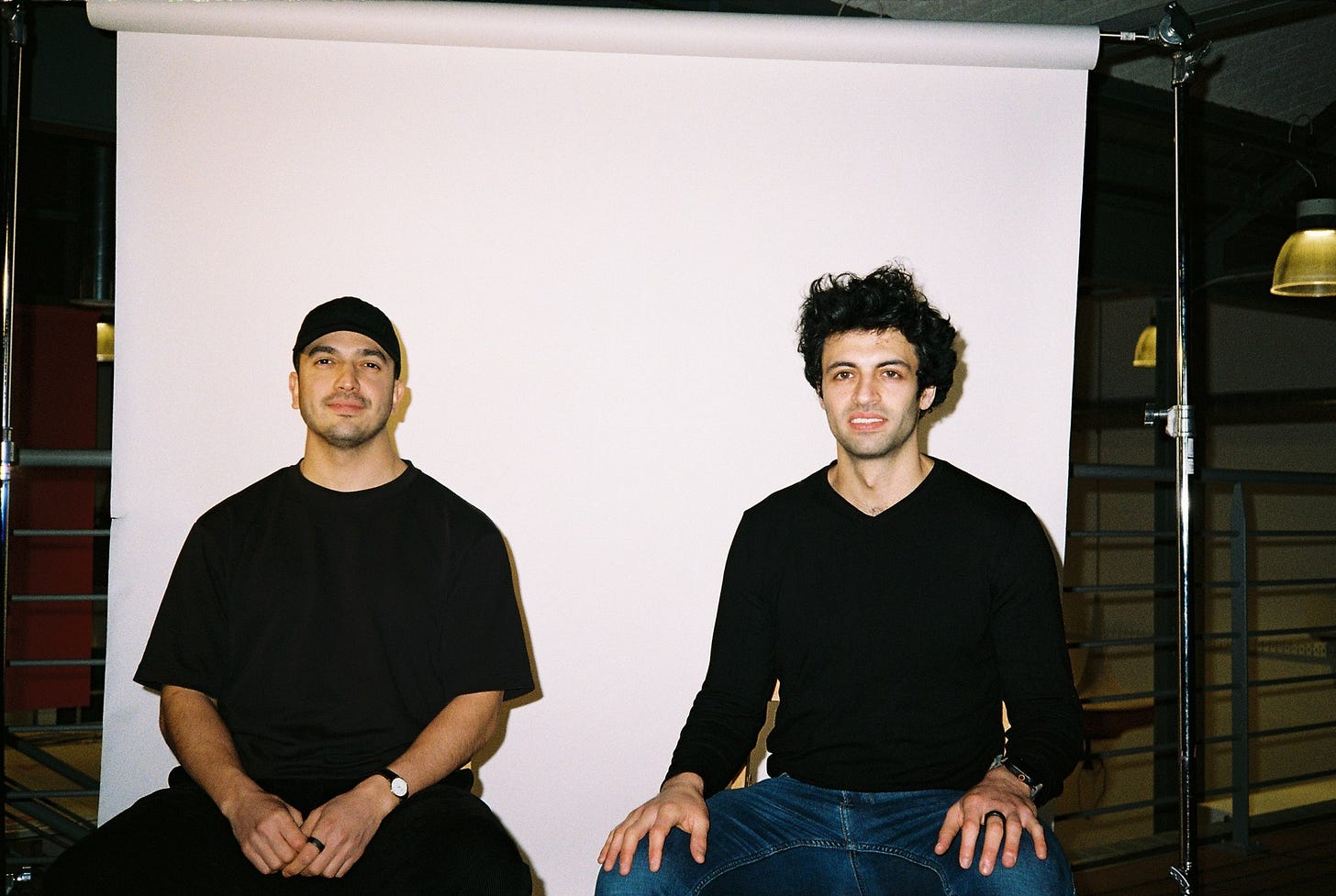 Renato Circi and Rafaël Michali, founders of Sava
Why continuous measurement
Many preventive healthcare companies now rely on blood tests to give you a picture of your health status. The problem with blood tests however, is that they give you a reading at one moment. You cannot continuously monitor your blood: you have to go in for another test to understand how it evolved. Renato believes that true preventive healthcare can only happen if what’s happening inside your body can be monitored continuously. The obvious starting point was diabetes: people who suffer from it deeply understand the pain of having to constantly monitor sugar levels: a glucose value means something different when it is rising quickly than when it is steady or falling. Following the trend helps them understand what is happening between the readings they would otherwise take themselves.
A continuous glucose monitor, usually shortened to CGM, is a small device worn on the body. Its sensor reaches beneath the skin and measures glucose in interstitial fluid, the fluid between cells. The device turns those measurements into readings and trends that the wearer can follow on a phone or another display. This is an example of a biosensor: a device that uses a biological or chemical response to detect a substance and turn it into a measurable signal.
Glucose monitoring has given continuous molecular measurement a clear use. It also gives Sava a demanding place to begin. Abbott and Dexcom are established competitors with years of clinical evidence and experience making and selling these devices. A new sensor has to give people dependable readings, while being comfortable enough to wear for days and practical to produce at scale. Sava’s aim is to reduce the discomfort and cost of monitoring without giving up the accuracy people depend on.
Building a sensor the body can tolerate
The difficult part begins where the device meets the body. A glucose sensor needs chemistry that responds to glucose while surrounded by other substances. That response must remain dependable as conditions change and the device stays in place. Meanwhile, the body can react to the material inserted beneath the skin, affecting how the sensor behaves.
These problems cannot be worked on in isolation. A material that the body tolerates may make measurement harder. A change to the adhesive can require more testing. A component that improves a prototype may be difficult to assemble in large quantities. Chemistry, electronics, mechanical design and software all have to work together, and the result has to survive ordinary use outside the lab.
Sava has chosen to use much smaller sensors than their competition. Traditional CGMs use a filament inserted around 5-10 millimetres beneath the skin. Sava’s microsensors are approximately ten times shorter and sit just beneath the surface, where they can still reach interstitial fluid. The idea is to disturb less tissue and make the device easier to wear. But reducing the size creates its own question: can the sensor keep producing accurate readings for long enough to be useful?
 Sava microsensors compared with conventional filament sensors
From the lab to clinical evidence
In February 2026, Sava published results from an independently conducted study involving 46 people with Type 1 and insulin-dependent Type 2 diabetes in Oxford and Cambridge. Each participant wore a Sava sensor and a leading commercial CGM at the same time. Both were compared against a laboratory reference, so the team could test the smaller sensor against an established device over ten days.
Sava reported that the gap between the devices was about 0.8 percentage points on MARD, a measure of average relative error against the reference. Put plainly, this measures how far the readings are from the reference on average.
This is a great result, proving that the smaller-sensor approach can work effectively in people with diabetes, over a period of sustained use. It gives the team a basis for further clinical work and manufacturing development.
 A Sava sensor on the upper arm, with readings on a phone
Building the company around the device
One of the things that most impressed us about Renato and Rafaël is that the company they’re building is multi-faceted, and they had to face (and will have to face) several challenges at the same time. Creating a piece of hardware is not exactly the same as building a software product: Research, prototype development, clinical testing and preparing for production ask different things of a team. Renato and Rafaël have had to carry what they learned through each stage, while building the organisation needed for the next one. Their determination has shown up in that work over several years.
Manufacturing is a particularly important step. Making a sensor that works in a study does not tell you whether you can make thousands of them with the same behaviour. Changes intended to reduce production cost can affect performance. The promise of a smaller, more affordable device depends on getting both the design and the production process right.
The company also needs people who know how to bring a medical device to patients. In May, John Bernard joined as Chief Commercial Officer after seven years at Dexcom, where his work included co-creating Dexcom ONE and leading the global launch of G7. John’s experience is crucial, as Sava prepares to move beyond development. The person wearing a device, the clinician recommending it and the organisation paying for it may all be different, but the product has to work for each of them.
What’s to come after glucose
Glucose gives Sava a defined first product and a way to test the technology. But it’s the possibilities beyond it that makes us excited for the company’s future. Today, activity and sleep data tell us part of what is happening to our bodies. Molecular measurements could add another part, letting us examine those changes together rather than separately. Continuous blood monitoring mans there is the potential to create a global leader in preventive healthcare: not just superficial sensors that track heart rate data, but something that could give people a true, holistic, continuous picture of their health in real time.
Sava describes its sensor platform as modular, with the aim of adding measurements such as cortisol and ketones. A glucose sensor does not become a hormone sensor through a software update: each molecule requires its own sensing chemistry and validation. The wider ambition will therefore take further research, just as the glucose product has.
Continuous monitoring is already reaching people beyond its original diabetes applications. The FDA’s 2024 clearance of Dexcom’s Stelo, for example, included adults without diabetes who want to understand how diet and exercise affect their glucose. That expands access to measurement. Building useful preventive-health products still means showing what someone can learn from those readings and what they can safely do with that information.
As AI makes data easier to analyse, I think the ability to collect reliable biological measurements becomes more valuable. Better software can help us understand a pattern, but it needs the sensor to capture the data first. Sava is working on that physical part of the problem, with the possibility of supporting more applications as the measurements improve.
I would like to see more European research become products people use for their health. Renato and Rafaël began in a European lab and are building a company in London for a global market. We backed them because of the quality of their work and the way they have kept moving through the stages between an idea and a product.
We first invested in Sava in December 2024. We are backing the company again in its $36 million Series B, led by Ascensia, alongside Balderton Capital, Pentland Ventures and True Global. The new capital will support manufacturing scale-up, regulatory work and preparations for commercial launch. These are the next steps in bringing the sensor to the people it is being built for.
-Lorenzo