I first met Gabriel, the founder of Pillar, in December 2024. As a true “aficionada” of vertical SaaS and boring industries, construction tech was one of those categories ripe for disruption, with a handful of genuinely exciting players beginning to emerge across Europe. He wanted to build an operating system for the construction industry. But, as most of you know know by now, a massive industry alone and an idea, are not enough to create something big. So let me tell you what else I saw.
To do so, I tried to scroll back to the first message I ever sent Gabriel on WhatsApp (spoiler: I gave up after a few minutes). I realized that at some point the conversation stopped being about Pillar and started being about “the big picture”: the Italian ecosystem, what it means to build something that matters, why he would hire complete young outliers, why culture matters, how he picks investors, how to hold a team together when things are moving fast, how they are building an AI first company (in construction?!), and so on. I’m not sure when exactly that shift happened. But I know it happened before we even decided to invest. That’s the thing about the deals you really believe in.. you become a supporter even before you become an investor.
An infrastructure problem
Let’s start with the problem. There are over 500,000 construction companies in Italy alone. Almost all of them are small. Most of them run their entire operation on a combination of Excel, WhatsApp, email, and phone calls. A delivery note arrives on site: it's a piece of paper, or a photo someone sends to a group chat. An invoice comes in: it goes into a folder, maybe. The owner finds out how much a job actually cost (if they're lucky) a few weeks after it's finished. Margins are discovered retrospectively, not managed in real time. This is not a technology problem. It's an infrastructure problem. And infrastructure problems, when you solve them properly, tend to produce companies that last. Think about what Veeva did for pharma, or what Procore did for large construction in the US: they became the operating backbone of their industries, and today they are worth tens of billions. Italy's construction sector alone represents a $2bn opportunity, concentrated in a mid-market band of over 500,000 companies where complexity has outgrown spreadsheets but full ERP deployments are still too heavy, too expensive, and too poorly adopted on site. But then you obviously ask yourself, is this happening only in Italy? (I’ll answer this question in the article for their next round).
From chaos to clarity
What Pillar has built is deceptively simple in concept and genuinely hard to execute. A construction operating system for Italian SMEs that bridges the gap between what happens on the jobsite and what the owner sees in their back office. The entry point is the pain that every construction firm owner knows: the lag. Site inputs arrive late and unstructured. A delivery note (DDT in Italian) is a piece of paper on a truck. A foreman snaps a photo and sends it somewhere. By the time it reaches the admin and gets reconciled against an invoice, days or weeks have passed. In that gap lives margin opacity, cash flow blindness, and a persistent inability to understand, in real time, whether a job is actually going well or quietly bleeding.
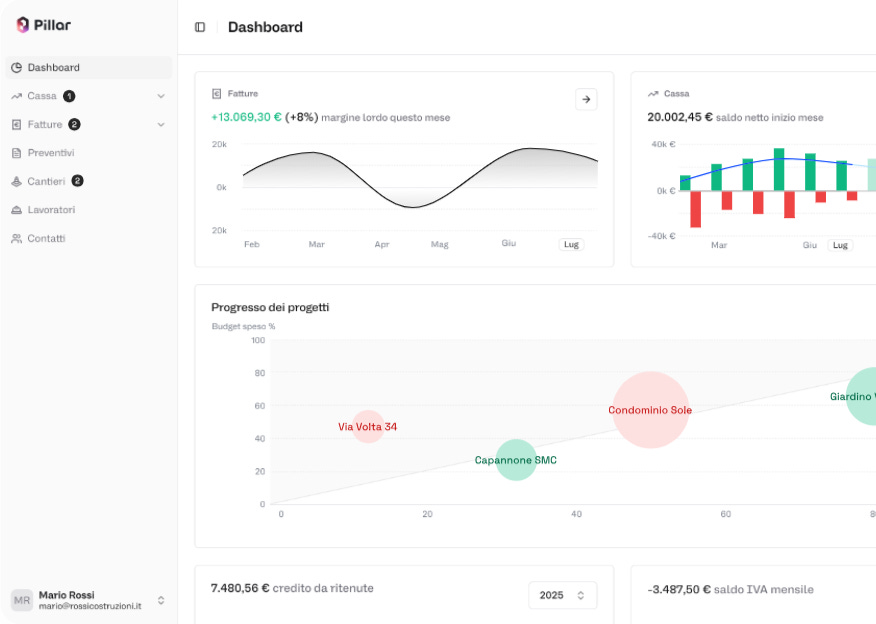
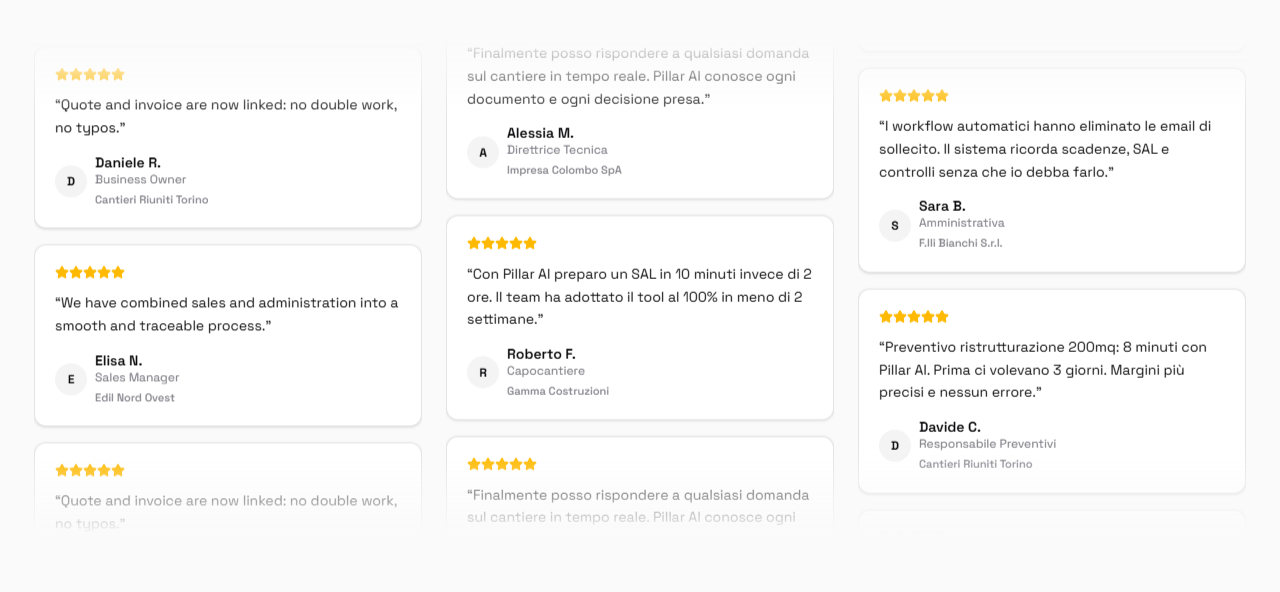
Pillar compresses that gap. Using a messaging-native capture layer, think: the same behavior you already have on WhatsApp, turned into structured financial records. It converts site artifacts into job-linked data in real time. Delivery notes, photos, voice notes, daily reports: all of it flows into a single system that connects quoting, execution, invoicing, reconciliation, and cash planning into one coherent loop. The result is something customers had never had before: near real-time margin visibility at the job level. Early customers reported cutting document processing time by around half. One admin manager in Sardinia (a villa builder, around €1-2M in annual revenue) described saving approximately seven hours a week versus her previous stack. She didn't even describe Pillar as a tool. She described it as a dependency. And it's not just existing customers. Even prospects who had passed came back on their own, because everyone in the industry is quietly realizing this is something you shouldn't live without. People can't keep up anymore, they can't stay on top of everything. The administrative burden of running a construction business in Italy is simply too high, and once you've seen what it looks like when it's gone, you don't go back.
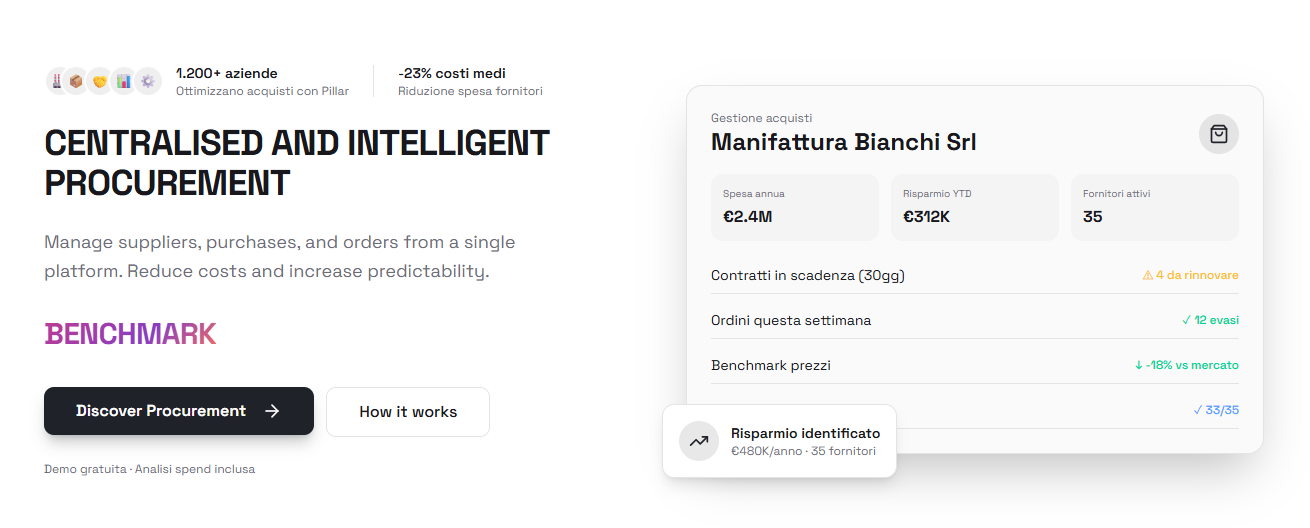
… And like every winning Vertical company, what excites me most is what Pillar becomes once it owns the system of record. When you are the place where every delivery note, invoice, job cost, and margin data point lives (aka when construction firms trust you with the full economic narrative of their business) the surface area for what you can build next becomes enormous. Procurement is the most obvious next layer, comparing vendors, flagging price drift, aggregating demand across hundreds of companies. Then there's embedded finance: granular, auditable job-level cash flow data is exactly the infrastructure that makes working capital products possible in a segment historically underserved by banks. And the construction SME problem exists across Europe. The playbook is replicable.
Why this team will win
I met Gabriel in person during the Italian Tech Week 2025. They had already raised a $3.2m pre-seed led by Emblem, the idea was solid, there was an early product, a few people in the team. We stayed in touch. We met again at a few drinks / dinners. There was A LOT of interest for what they were building, and, most of all, the way they were building it. By the time we sat down properly to look at the deal in January, there were only a few months of data to analyze. So you mostly had to believe that the future numbers were making sense. Funnily enough, between term sheet and closing, they more than doubled the ARR they had built in all the months before that, reaching €1m ARR less than 6 months post launch (top 5% of B2B SaaS company). And here's the thing: all this time, I wasn't underwriting the numbers. The numbers were just confirming what I already believed. The question I kept asking myself (the one I always ask when the product is interesting and the market is real, big, and growing into the right direction) was about the team. Can they actually execute this and grow the company 100x? 1000x? Can they attract talent and inspire people to work for them? Can they hold together under pressure? Do they understand the impact that AI will have in the way people buy and build software? Can they build something durable, not just something that works in the early days? I believe yes – and that is a conviction you will only develop by spending time with them, from the early days but most of all by understanding the way the founders think and the way they operate.
The people behind the numbers
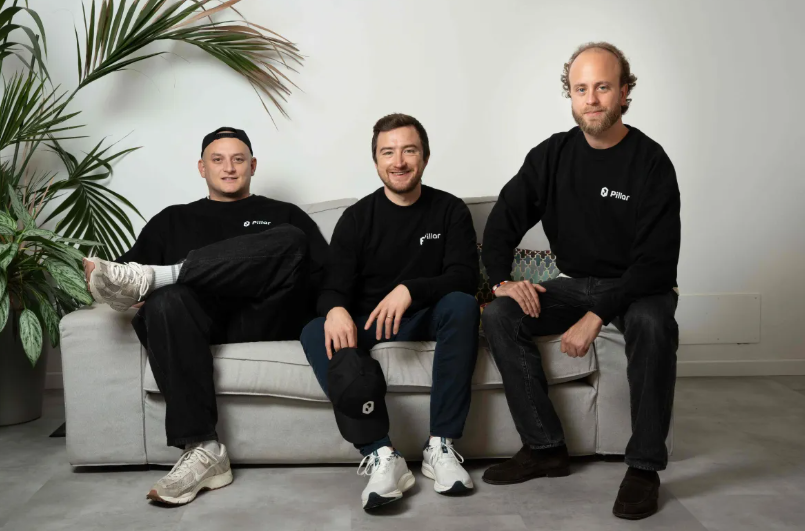
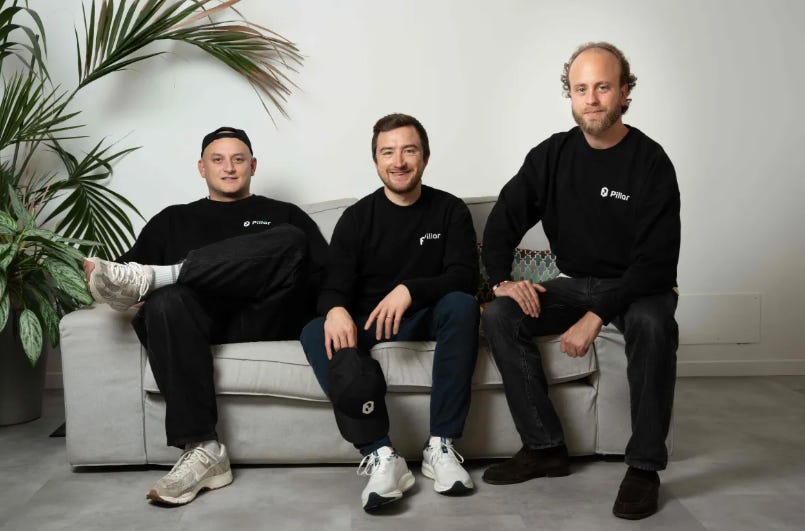
I believe Gabriel is a total outlier, and I mean that in the specific, non-generic way: the combination of things that make him who he is does not come together very often. He's been entrepreneurial since he was a teenager: by eighteen, he had saved enough to start investing on his own. He spent time at Credimi and Qomodo and came out of both with a sharper sense of what he wanted to build. He has that rare combination of deep curiosity and financial intuition that you almost never see together, fused with a founder's restlessness, grit, and capacity for conviction that is genuinely hard to explain. He dreams at a scale that makes you feel uncomfortable. And underneath all of that is something rarer still: he actually cares! About the product, about the mission, and deeply about the people building it with him. That last part, in my experience, is what separates the founders who build something good from the ones who build something lasting. Paolo, who leads GTM, brings ten years of experience launching and scaling businesses in Italy: Foodora, Cityscoot, Qomodo. He is execution-first in a way that complements Gabriel's vision. Lorenzo, on product and engineering, has been building things since his H-Farm days and brings the technical craft and calm you want when you're shipping fast. The three of them cover the three things that matter most at this stage: product, distribution, delivery. During a meeting at their office, we asked them to be honest about each other strengths and weaknesses and the complementarity was just very tangible. And you see this in everything they do. Boring sector, anything but boring team. As they are saying, there's one asset no competitor can clone, no downturn can erase, and no market can price: culture. They move fast across the board: shipping, hiring, thinking. And they are AI-native in practice, not just in pitch decks (if you apply for one of their open roles your first call will be with an ElevenLabs voice!).
A €12M seed and what’s next
This round was quite competitive, but we are proud to participate in this €12m seed alongside Base 10 and Earlybird. We are proud to be the only new Italian investor at the table as we hope we can help, starting from Italy, to create a global player in the construction field.
This was not an easy deal to win but one where building conviction was easy and natural. I hope every investor gets to find at least one investment like this: a deal where you run out of reasons to say no, and somewhere along the way, the founders stop being a portfolio company and start being people you’d do anything to see win.
To Gabriel, Paolo, Lorenzo and the Pillarnauts: Changing the world one cantiere at a time
Virgi